
JAPANESE CHRISTMAS TRADITION: KENTUCKY FRIED CHICKEN
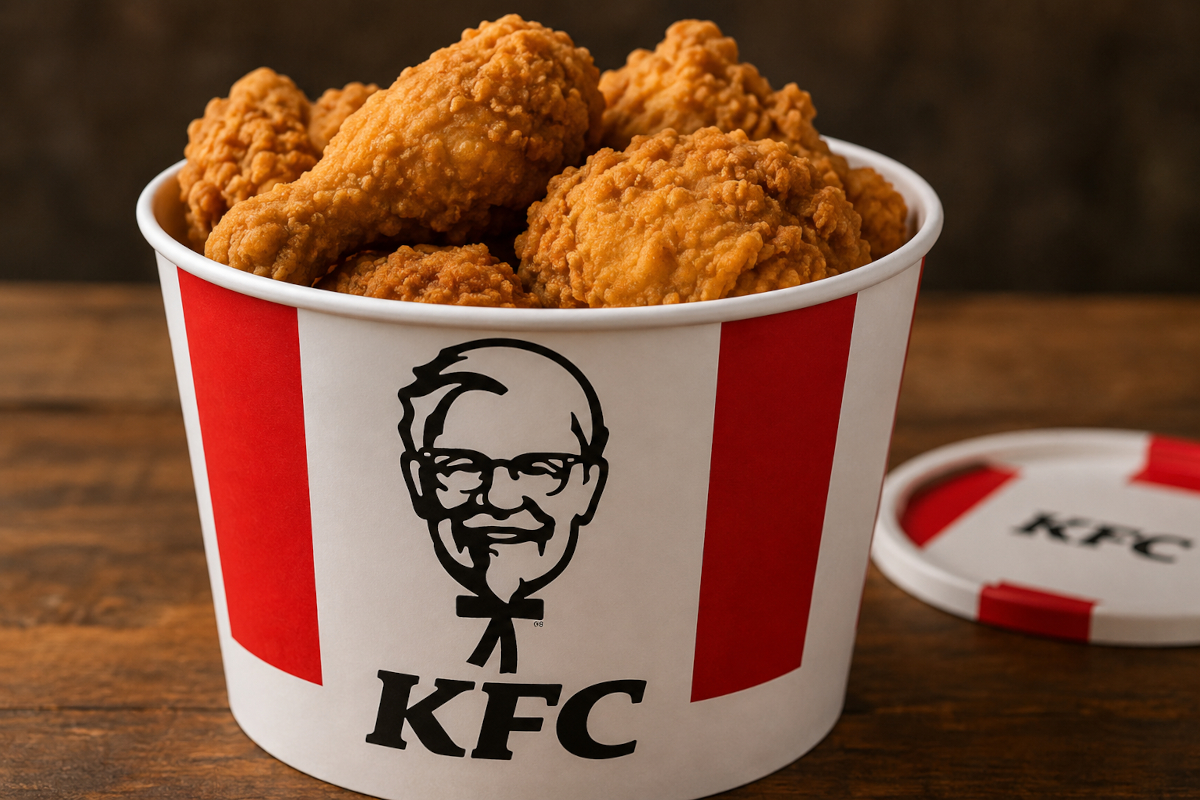
Christmas is celebrated in Japan with much fanfare. Families gather around the table in great anticipation, having waited all year long for their traditional holiday meal. It is a national phenomenon that has become ingrained in the Japanese culture. Traditional Japanese cuisine is not served. They feast on Kentucky Fried Chicken (KFC). It is so popular that people need to order party barrels weeks in advance. For those who wait until Christmas Eve to purchase their dinner, they can expect to wait for hours on long lines.
KENTUCKY FRIED CHICKEN ENTERS THE JAPANESE MARKET
Takeshi Okawara was a young highly educated entrepreneur, having received an advanced degree in management from Harvard Business School. He became fascinated by the late-in-life success of Harland Sanders, the founder of Kentucky Fried Chicken. He was offered various positions in the company’s first venture into Japan. Okawara was only interested in one job, store manager. It would provide him with the opportunity to learn everything about running the fried chicken business.
In 1970, Kentucky Fried Chicken opened their first store in Japan with Okawara as its manager. Located in Nagoya, the business was a total failure. While karaage, deep fried panko breaded pieces of chicken, meat or fish were popular Japan dishes, they were unlike KFC. Chicken karaage were usually thin, deboned thighs. Potential customers were completely unfamiliar with the concept of thick, crusty boned chicken. The major failure, however, was the unknown branding of the product. The signs were all in English. People failed to even recognize what was being sold. The red and white roof of the business confused pedestrians into believing it was either a barber shop or chocolate shop.
TAKESHI OKAWARA GETS A BRAINSTORM
The company claims that the account of events that lead to the Japanese obsession with KFC started when Okawara overheard a customer waiting to be served. The customer spoke about being in Japan during Thanksgiving and missed having a traditional turkey dinner. She said chicken was the next best thing. As the story goes, this led to Okawara having a dream one night. He dreamt of creating KFC party barrels for Christmas.
In order to save his business, Okawara then falsely marketed Kentucky Fried Chicken as the traditional American Christmas celebration and received an overwhelming response. This was a time in Japan when people were craving everything American. The concept of a party barrel was also not alien to them, as sharing food was a traditional cultural practice.
THE IDEA GOES NATIONAL
As Okawara’s marketing plan found renouncing success, KFC decided to take the idea national in 1974. They called their marketing slogan “Kurisumasu ni wa Kentakkii” meaning “Kentucky for Christmas”. Standing in front of every KFC outlet in Japan was a big plastic Colonel Sanders dressed in a red satin Santa costume. The Christmas party barrel quickly became a national phenomenon.
The Japanese did not celebrate or have any customs associated with Christmas. It was never a holiday in Japan, with less than 1% of the population being Christian. KFC ran a sophisticated advertising campaign to win over the hearts, minds and stomachs of the people. A television blitz campaign featured a happy family excitedly gathered around the table feasting on a tantalizing banquet of holiday KFC party barrels. In the background softly played the traditional American Christmas song. And what was this alleged song? Why “My Old Kentucky Home” of course. Who could resist? As many slick advertising campaigns before and after, it would alter the consumer’s wants and needs. Who would not want to celebrate a typical America Christmas with Kentucky Fried Chicken?
IT FOUND ITS WAY INTO JAPANESE CULTURE
Christmas sales now account for a third of KFC’S annual revenues in Japan. Colonel Sanders soon became the Japanese symbol of Christmas. After the country wide advertising campaign became a huge triumph, it found its way into Japanese culture. Now generations of families look forward to sitting down to their traditional KFC Christmas dinner.
THE COLLAPSE OF THE JAPANESE ECONOMY
After the Second World War, the Japanese economy had collapsed. The Allies had laid waste to their cities, transportation systems, and factories. Japan had widespread overseas territories prior to the war. These included Korea, Taiwan, Penghu Islands, Manchuria, occupied China, the Kuril Islands, South Sakhalin, the Pacific Mandates, Okinawa and Ogasawara Islands. These were all surrendered at the conclusion of the war. This left the country with only its four chief home islands of Shikoko, Hokkaido, Honshu and Kyushu. Historically, Japan had received most of its raw materials for manufacturing from its territories. When Japan surrounded these outposts, all trade with their former territories ended, eliminating access to food and raw materials. This created extreme shortages and hardships for their people. Industrial production in 1946 was 26% below pre-war levels with wholesale prices increasing 360%. A scarcity of basic consumer goods and food rationing created a booming black market presenting the only option for the average citizen to survive.
THE ALLIES STEPPED IN
The Allies intervened, giving the Japanese an opportunity for their economy to rebound. The zaibatsu (family run corporate monopolies) were dismantled, allowing markets to open to competition. Land reforms permitted tenant farmers to become landowners. New financial policies stabilized out-of-control hyperinflation.
THE KOREAN WAR
In 1950, the Korean War broke out. The United Nations utilized Japan as the strategic supplier and distribution center for their forces. This resurrected Japan’s heavy industry of coal and steel. Billions of dollars were poured into Japan for manufacturing and procurement by the United States during the war. Japan’s national defense was taken over the United States. This enabled Japan to focus on rebuilding their economy. They directed their efforts into technology, infrastructure and building modern factories.
THE JAPANESE NOW HAD CASH AND LOOKED TO AMERICAN CULTURE
With their economy exploding, the Japanese people had the cash to indulge in consumer culture for the first time in their history. They looked to America for inspiration. They wanted American fashions, foods and whatever else was popular. American corporations in the 1970s looked to the Japanese market to expand their businesses. The fast-food industry in Japan expanded 600% between 1970 and 1980. KFC became part of this stampede.
OKAWARA IS REWARDED FOR ALL HIS EFFORTS
Okawara was well rewarded for his inventiveness in introducing KFC to the Japanese public. He was given various positions within the company until he became the Kentucky Fried Chicken Japan CEO between 1984 to 2002.
THE MENU HAS KEPT EXPANDING
When KFC first introduced their menu to the Japanese public only classic KFC chicken was available. Today, the options are significantly more elaborate. They can indulge in fried chicken, nuggets, chicken tenders, lobster lasagna, meat gratin, pot pies, roast chicken stuffed with mushrooms and cheese, truffle fries, strawberry vanilla mousse, tiramisu and wine. Every year new items are added for the holidays and customers cannot get enough of the adorable picture plate that comes as a festive bonus.
LOOKING TO INCREASE SALES
To increase sales further, KFC now extends the holiday to include the days leading up Christmas. Television commercials for KFC play constantly at this time of year. The company has even opened pop-up Christmas restaurants which serve high end chicken dishes paired with wine.
JAPANESE KFC STORES TODAY
KFC currently operates 1,277 stores in Japan. It is the company’s third largest market after the United States and China. The goal is to open 60 to 70 new stores each year, with the expectation of having 1,700 stores operational by 2030.