
THE DREAM OF A BLACK OKLAHOMA
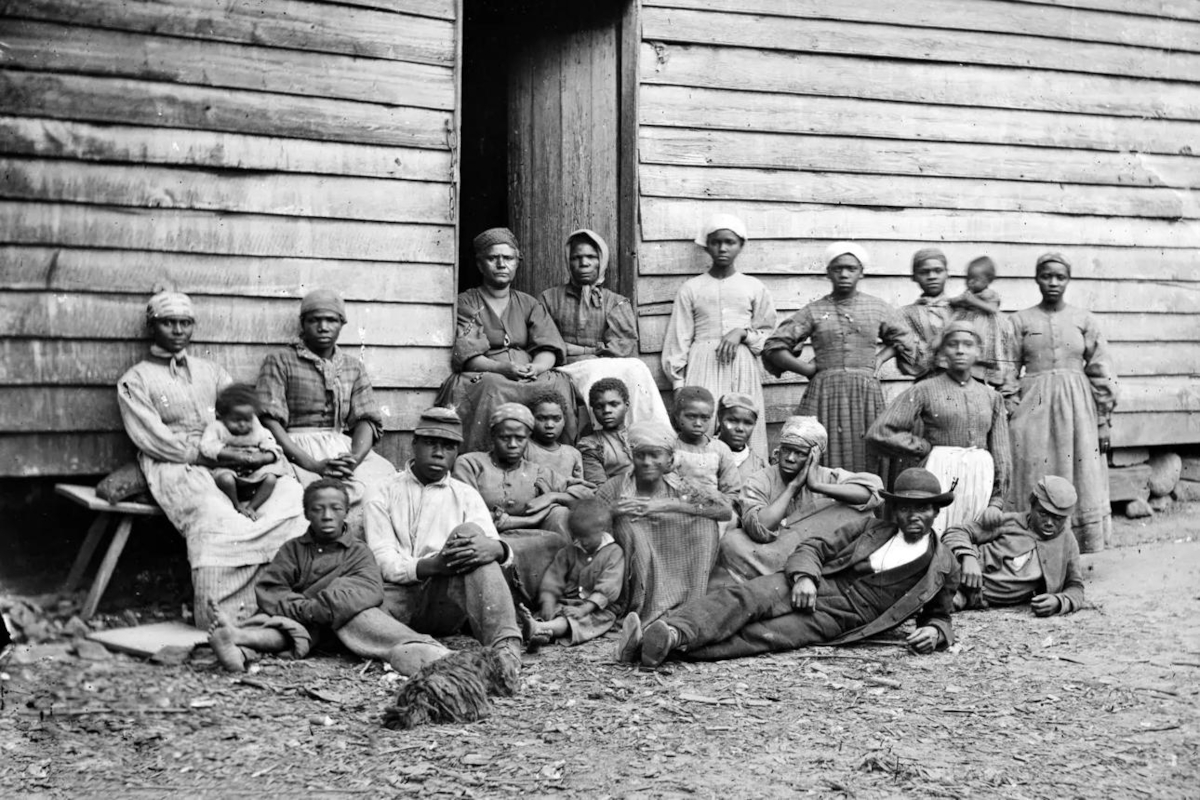
With Reconstruction failing after the Civil War, despair engulfed Blacks throughout the South. Their dreams were dashed, replaced by fear, threats and violence. One man, Edward P. McCabe became an inspiration to them by establishing a self-governance movement. He sought a way for Blacks to break free from the oppression of Reconstruction in the South. Invigorating their hope for the future, tens of thousands of Black settlers migrated to the Oklahoma Territory.
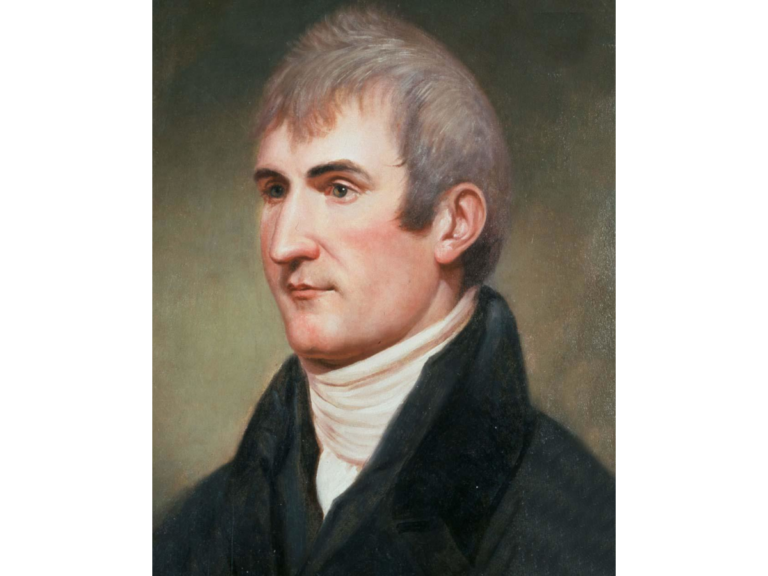
EDWARD P. McCABE (1850-1920)
McCabe became the first African American outside of the South to hold statewide office, becoming the Kansas State Auditor. This made him one of the highest-ranking elected representatives in the American West. He became a prominent and influential leader promoting Black migration into the Oklahoma Territory. He inspired many Blacks to seek political office.
During his life, McCabe founded the city of Langston, Oklahoma, with a vision of creating a Black state and developed Nicodemus, Kansas as a black town. He was instrumental in the establishment of the Colored Agricultural and Normal College (it is now called Langston University).
PURSUING FREEDOM FROM OPPRESSION
People of like mind to McCabe began advertising in newspapers with ads reading, “Ho for Kansas” and “Ku Klux or Kansas!”. If blacks were to pursue freedom from oppression, McCabe believed, they needed to get out of the South.
It was during the Trail of Tears that Blacks first came to the Oklahoma Territory in the 1830s. When Native tribes were forced off their ancestral land and made to walk to Oklahoma, they took their slaves with them. An additional 500 Blacks found their way there while escaping slavery. Later, former slaves sought political freedom in Oklahoma.
THE TRAIL OF TEARS
President Andrew Jackson implemented the Indian Removal Act of 1830 with the express purpose of ethnically cleansing five Native American tribes, the Cherokee, Chickasaw, Choctaw, Muscogee and Seminole. Sixty thousand tribe members with their Black slaves were driven from their ancestral lands into the Southeast between 1830 and 1850. The majority were sent to Oklahoma and placed on new land. During this forced march they suffered from starvation, exposure and disease. Approximately 15,000 Native Americans died on these marches.
The Dawes Act of 1887, then reclaimed much of the land given to the Native Americans in Oklahoma. This law converted the massive land allocated to the Indians into 160-acre individual lots for tribal members. All the remaining land was classified surplus and considered public domain. In 1889, the government made the Creek and Seminole tribes return 2 million acres of land. These seized lands were then opened up for white settlers.
40 ACRES AND A MULE
The concept of Reconstruction, had it been carried out as first intended, would have enabled some formerly enslaved people to establish productive independent lives for themselves. The government’s Reconstruction program was anchored on land distribution. In 1865, Special Field Order #15 was issued by General William T. Sherman. This wartime order confiscated 400,000 acres of Confederate lands along the coastlines of Georgia, South Carolina and Florida. The intent was to redistribute this land in lots of up to 40 acres to 18,000 former slave families, with mules to assist in the success of these efforts.
It is a misconception to believe the government’s intent, commonly known as “40 acres and a mule”, was to assist all former slaves to become landowners. At best, if it was fully implemented it would have helped only a fraction of the 4 million newly freed former slaves. Politicians falsely claimed to former enslaved constituents that they had the right to own the land that they had previously worked, and they fully expected this to happen.
ANDREW JOHNSON BECOMES PRESIDENT
Had Lincoln not been assassinated the fate of former slaves might have been dramatically different. When Andrew Johnson became president, promises made under the Lincoln administration went out the window. Johnson’s allegiances were with the South. He wanted to immediately reinstate southern states back into the Union. He granted an amnesty proclamation giving back property rights to ex-Confederates and ordered the lands given to former slaves to revert back to the original owners.
The military had been in charge of land distribution during and immediately following the war. The government during this time distributed 1,250 land titles to freed slaves. Successful farming communities were formed. They were now forced off their legally obtained land and into sharecropping.
THE COMPROMISE OF 1877
The presidential election of 1876 was the most contentious presidential election in United States history. Democrat Samuel J. Tilden ran against Republican Rutherford B. Hayes. Neither one of them had a sufficient number of electoral votes. An informal agreement known as the Compromise of 1877, was finally reached with Southern Democrats accepting Republican Rutherford B. Hayes as president in exchange for the removal of federal troops from the South and allowing the States total autonomy to handle race relations and internal affairs without any federal input. This killed off any hope that Reconstruction would provide former enslaved Blacks any path to integrate into American society.
THE WITHDRAWAL OF FEDERAL TROOPS
Once the troops left the South, the federal government completely deserted the newly freed slaves. This led to implementing Jim Crow laws requiring racial segregation. Pre-Civil War Confederate Democratic politicians found themselves once again in power.
RECONSTRUCTION FAILED TO PROTECT NEWLY FREED SLAVES
The Compromise of 1877, the brutal white supremacist movement and economic abuse of newly freed slaves ended Reconstruction. At no point were formerly enslaved people given any opportunities for civil rights and economic equality. The economic depression of 1873 was the last straw, resulting in Northerners focusing on their own interests and losing interest in freed Blacks.
THE LAND RUN OF 1889
Congress authorized President Benjamin Harrison to grant a two-million-acre region in Oklahoma under the Homestead Act of 1862 open for settlement. Settlers were allocated 160 acres of public land to work and improve. After a five-year period, they were given title to the land. Across America, people from all walks of life rushed to Oklahoma to claim their land. Fifty thousand people surrounded the land waiting to be allowed to make their claim. The Land Rush resulted in a significant increase in Black settlers in the Indian Territory, becoming the largest number of African American homesteaders in the nation.
EDWARD P. McCABE PETITIONS THE PRESIDENT FOR A BLACK STATE
In 1890, McCabe appealed to President Benjamin Harrison to appoint him Governor of the Oklahoma territory and designate it as a Black state. He pitched that this would be the perfect solution to the “Negro Problem”. It would also prove, he claimed, that Black people could be adept at self-rule. President Harrison refused to support the idea.
THE IDEA WAS TOO IMPORTANT TO BE DISMISSED
McCabe did not permit Harrison’s refusal to stop him. In 1890, he established Langston, Oklahoma. He planned to aggressively recruit Blacks from the South to overwhelm the number of white newcomers. In large numbers, they would be able to gain political power, he believed. Despite his efforts, he failed to recruit enough Blacks to counter the mass arrival of white settlers into Oklahoma.
WHY DID OKLAHOMA STATEHOOD DESTROY ANY HOPE OF A BLACK STATE?
Prior to Oklahoma statehood, in 1907, Blacks were able to self-govern in the Indian and Oklahoma territories. This led to the settlement of over two dozen independent Black towns being created.
Statehood ended any possibility to pursue this dream. Firstly, Blacks were not permitted to take part in the 1906 constitutional convention drafting process. This resulted in the State draft codifying the restriction of economic and political control to white settlers.
Secondly, Congress did not permit restricting voting rights based on race. After Statehood was achieved, however, the first State Senate bill enacted provided for statewide legal segregation. Then voting rights restrictions were passed into law. Without the ability to vote, citizens of Black townships were systematically removed from their lands which they had gained under the former legal tribal allotment.
McCABE’S LEGACY
McCabe, revolted by Jim Crow laws being enacted in Oklahoma, picked up and left the State. His dream was in shambles, replaced by the reality of entrenched racial violence and codified segregation. The several all-Black towns, he attempted to establish continued for a time. Greenwood in Tulsa was an independent financially successful town which became known as the “Black Wall Street”. It was completely destroyed during the 1921 Tulsa Race Massacre. Other all-Black towns fell into rapid decline due to the Depression and the mechanization of farms, reducing the need for farm labor. This ended up forcing its citizens into urban centers to find work.
Once Oklahoma became a State, Black settlers lost everything they had gained. Despite this, there are still a few Black towns in Oklahoma today which remain a legacy to McCabe.