

SIR ISAAC NEWTON AND HIS OBSESSION THAT COULD HAVE GOTTEN HIM SENT TO PRISON IN DISGRACE
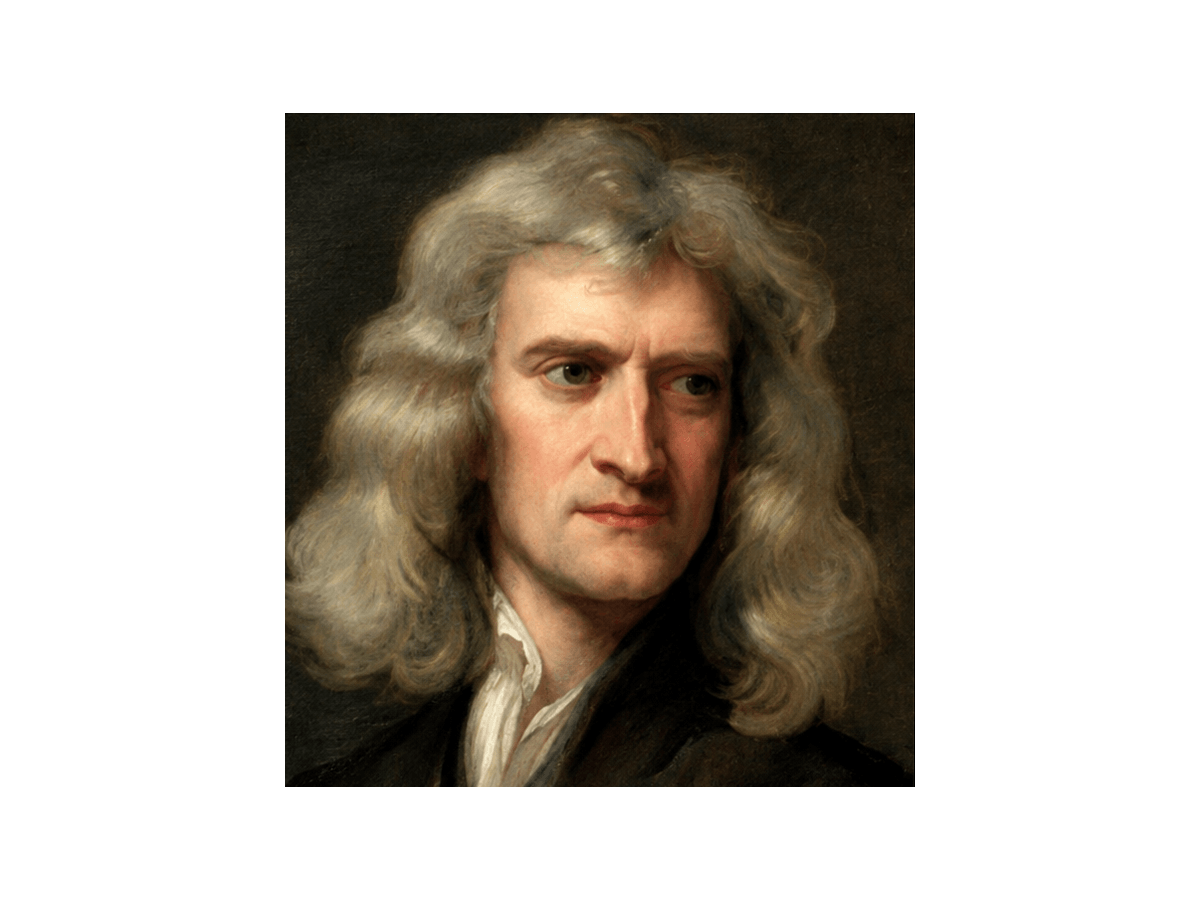
Sir Isaac Newton had a secret obsession that could have destroyed him. His obsession was alchemy. He was so focused on unlocking the secrets of what at the time was called, “Ancient Magic”, that the majority of his written work was not in science or mathematics but on Alchemy. This work was done in secret, since it was considered heretic to the Church and outlawed in England. He kept it closeted by writing in cryptic shorthand and ciphers. So hidden in his writings were his alchemy experiments that they would not be known outside a small circle of people for two hundred years, stunning the world. Newton was equally devoted to rational physics and mystical occultism.
WHO WAS SIR ISAAC NEWTON?
Newton was a polymath; a person whose expertise and knowledge were extensive and covered many subjects. He was a mathematician, astronomer, physicist, theologian, inventor and author. He was a dedicated and driven man whose life was his work. Newton’s seminal works significantly contributed to the Scientific Revolution and the Enlightenment.
Born in 1642 in Lincolnshire, England, he was the first person to integrate the principles of physics. In his book, Mathematical Principles of Natural Philosophy, he defined the forces acting on the motion of objects that are visible to the human eye, called Newton’s Law of Motion. Newton played a large role in the development of optics and infinitesimal calculus. He was the first person to construct a reflecting telescope. Using his mathematical theory of gravity, he developed “Kepler’s Laws of Planetary Motion”, which explained the precession of the equinoxes, trajectories of comets, and the rise and fall of tides. These are just a few of the amazing accomplishments of Newton. He became renowned worldwide for his contributions to science and mathematics. He was considered a major influence in the development of modern philosophy and later in his life wrote extensively on religion.
Newton was a professor of mathematics at the University of Cambridge, a fellow at Trinity College and served two terms as a member of Parliament. In 1703, he became president of the Royal Society and associate of the Academie des Sciences in France. He was knighted in 1705 by Queen Anne. He was then appointed first as the warden and then the master of the Royal Mint, improving minting technology.
When he died in 1727, he was given the unusual honor of being given a state funeral and buried in Westminster Abbey. This was not something extended to a person whose fame rested on intellectual pursuits. He spent his life driven by his work, producing 1,752 books
AN UNUSUALLY SECRETIVE MAN
A large portion of his work was written in complicated mathematical language, Latin and codes or ciphers. In his Alchemy experiments he used secret codes, symbols and language that only those versed in Alchemy would understand. Newton concealed his research behind poems, symbolism, figures of speech and metaphors, to protect himself from the church. He used numerical codes, architectural measurements and prophetic symbols to search for hidden timelines that would predict the end of the world.
Newton was dedicated to biblical research, producing over 4.5 million words on the subject. More than half of all his writings were in alchemy and theology. His biblical writings did not become publicly available until 1972.
WHY WAS NEWTON OBSESSED WITH ALCHEMY AND THE OCCULT
Newton was consumed with the belief that the universe was a “cryptogram” created by God. A cryptogram is an intricate puzzle which takes each letter in the phrase and replaces it with a different letter. Newton accepted that he was among a select few chosen by God to be given the ability to interpret prophetic language of scripture. He conducted his research as studies based on observation and experimentation instead of theory. His work was intended to decode the secret, basic forces controlling nature and rediscover ancient, lost wisdom.
He believed in the idea of “prisca sapientia”. This was the principle that knowledge existed ever since the start of time and was known to ancient civilizations. Over time, this knowledge was lost to humanity. Unlocking the secrets to alchemy he believed would lead to several life altering discoveries, reclaiming lost wisdom. Newton believed it would unearth the Philosopher’s Stone, the legendary material that turned base metals into gold and granted eternal life. Unraveling Alchemy would also allow us to understand the cosmic forces that would divulge God’s master plan, allowing humanity to connect with the universe.
Today, alchemy is perceived as the stuff of legends. Religion and science are separate entities. Newton believed that by successfully performing transmutation, that is turning base metals into gold, it would prove God’s divine design. This would confirm that science and religion are two halves of the same discipline. His work gives us a window into the origin of modern science. We still only have a glimpse of Newton’s studies on alchemy. A fire in his laboratory destroyed twenty years of his research. His surviving works confirm that he did not differentiate between science and alchemy.
WHY WAS ALCHEMY OUTLAWED IN ENGLAND
In Newton’s Day, it was against the law to practice alchemy in England. The primary reason was alchemy’s belief that base metals could be turned into gold. The idea of being able to produce unlimited “fake gold”, terrified the Crown. They feared that if it came to pass, it would lead to oversupply and inflation. The gold standard would then be devalued causing the global economy to change over to a silver standard.
NEWTON AND THE ROSICRUCIANS
The Rosicrucian’s were a cryptic brotherhood. They were not a religion but a society that used the occult to interpret ancient wisdom and Christian mysteries. They were devoted to the study of ancient spiritual knowledge and inner transformation. Their goal was to achieve a greater understanding of the divine and investigate a deeper level of the natural world and human awareness. They believed they could attain eternal life by using the legendary alchemy potion, the “elixir of life”. If drunk it could provide immortal life. They claimed to be in possession of the philosopher’s stone.
They released a group of nameless manifestos in the early 17th century declaring they were a secret brotherhood whose mission was to alter society and pursue the truth. This set off a spiritual and cultural movement influencing the greatest minds of the day.
Newton had much in common with the Rosicrucians. They were both deeply religious Christians but anti-Catholic. He was of one mind with their beliefs that enlightened individuals such as himself could access esoteric truths of the ancient past.
WHY WAS HIS HAIR TESTED FOR MERCURY AFTER HE DIED
In later life, Newton’s behavior became significantly altered. He suffered a nervous breakdown, had episodes of lunacy, severe paranoia and insomnia. For that reason, in 1979, researchers tested his hair for mercury poisoning. By that time, his obsession with alchemy was well known, a field that used high amounts of mercury in experiments. Newton never wore gloves when working with chemicals and often tasted his mixtures. His hair contained 15 to 40 times higher levels of mercury than normal confirming chronic mercury poisoning.
WHAT HAPPENED TO NEWTON’S WRITINGS
When Newton died in 1727, he left no will. His lifetime of research totaling over 10 million words came into the possession of his niece who turned to the Royal Society to review them. They found his works on alchemy and religion to be heretical and “not fit to be printed”. The papers remained in the family for over a hundred years. They then donated the scientific and mathematical papers in 1872 to the University of Cambridge. The remaining papers continued to be held by the family until 1936. At that time, a descendant put them up for auction at Sotheby’s. They were sold to dozens of people.
The two primary collectors, John Maynard Keynes and Abraham Shalom Yahuda succeeded in repurchasing large amounts of Newton’s forbidden works. Keynes donated works he obtained which were Newton’s alchemy research to the University of Cambridge. It appeared Newton’s prime interest in alchemy was focused on the Philosopher’s stone as well as the Elixir of Life. Indiana University is currently placing all of his known alchemy works online. Yahuda donated his procured works on Newton’s religious writings to the National Library of Israel.
WHAT EXACTLY IS ALCHEMY?
Alchemy is an ancient belief that merges science and philosophy with three aims: to discover the secret to eternal life, discover a medicine that would heal all diseases and turn commonplace metals into gold. The studies Newton performed seeking these answers set the stage for both chemistry and pharmacology as we know them today.
THE DEVELOPMENT OF ALCHEMY
The practice of Alchemy emerged out of ancient Egypt. It was based upon three concepts: Egyptian religious symbolism which explained the universe by combining life with the heavens and afterlife. This was conveyed through wall paintings in tombs, architecture and amulets. Egyptian goldsmithing (323-30 BC) which had developed into a sophisticated and elaborate art form and Greek aesthetics which attempted to define human perfection by blending politics, ethics, virtue and truth.
The Egyptians believed gold contained the energy of the sun. They called it “The Flesh of the Gods” because it never tarnished and shone like the sun. This profoundly inspired them to attempt to refine common inexpensive base metals like nickel, lead and copper into gold.
ALCHEMY IN THE ISLAMIC WORLD
After the Islamic conquest of Egypt, Islamic scholars radically altered alchemy into a formal discipline. They documented chemical processes such as the mercury-sulfur theory of metals. The word alchemy stems from the Arabic prefix al added to the Greek work kimiya which means “the art of pouring and alloying metals”.
ALCHEMY WAS REINTRODUCED IN EUROPE IN MEDIEVAL TIMES
Latin translations of Arabic manuscripts became known in Europe in the 12th century. They were then combined with astrological symbolism and Christian theology by European alchemists.
NEWTON’S LEGACY
We now think of alchemy as fantasy, yet it gives us insight into the beginnings of modern science. After obtaining Newton’s works on alchemy, economist John Maynard Keyes stated that Newton was “not the first of the age of reason” but instead “the last of the magicians”.
WAS THE ULTIMATE GOAL OF TURNING LEAD INTO GOLD EVER ACHIEVED?
The CERN laboratory near Geneva, Switzerland houses the world’s largest and most robust particular accelerator, the 88,600-foot-wide Hadron Collider. Located 575 feet underground, it uses superconducting magnets to smash particles together near the speed of light. Its purpose is to investigate the fundamental laws of nature.
Recently, at CERN, particle physicists created electromagnetic interactions when they slammed lead ions together at extreme speeds which knocked three protons out of the lead nuclei. To everyone’s astonishment this created approximately 89,000 gold atoms per second. Since gold has 79 protons and lead 82, by removing three protons from lead resulted in gold. The gold lasted for only seconds until the lead regained the three protons, but yet it achieved the alchemist’s dream.
