
THE MURDER CAPITAL OF NEW YORK
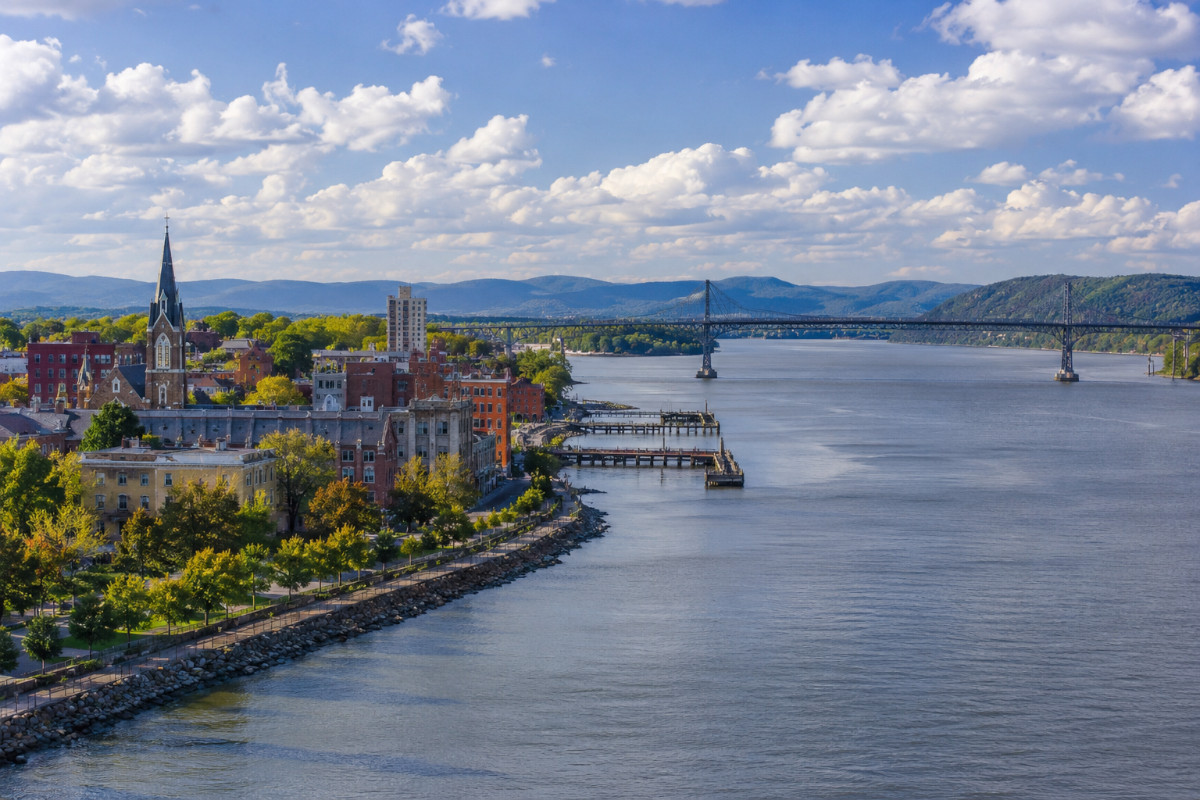
The Hudson Valley features quint villages, upscale suburbs and large tracts of farmland. Who would believe it hosts the murder capital of New York State?
NEWBURGH, NEW YORK
Newburgh is a rundown city mired in poverty and abandoned buildings. It was once considered the most striving community in the Hudson Valley. How did it turn into such a wretched place? It’s not the inner city and despite its small size (52 square miles with a population of 60,000), it has a higher rate of violent crime than any large inner-city slum. Many residents are afraid to walk the streets at night and for good reasons.
Violent gang wars and out in the open drug markets operate where once people took pride in their community.
EARLY HISTORY OF NEWBURGH
The Esopus and Waoranek native tribes initially occupied Newburgh. Their settlements were seasonal, moving through the year for hunting, fishing and farming.
The English explorer, Henry Hudson, after who the river is named, became the first European to sail the Hudson River as far North as Newburgh in 1609. He had set sail under the Dutch flag with a goal of finding a Northwest passage. At the time, it was believed that there was a sea route that would allow a direct trading passage to China. The Lewis and Clark Expedition later proved it did not exist.
In 1683, the land was bought by Colonial Governor Thomas Dongan from the local tribes. This enabled European settlement. In 1709, German Palatines, Lutherans from West Central Germany arrived in Newburgh. They named the town Palatine Parish by Quassaick. By 1750, English and Scottish settlers outnumbered the German population. Cadwallader Colden, New York’s surveyor general at the time, changed the name to the Parish of Newburgh. It was in honor of his father’s ancestral town in Scotland.
GEORGE WASHINGTON
In the last eighteen months of the Revolutionary War (1782-1783), Washington’s headquarters were located in Newburgh. It was here that Washington put down the Newburgh Conspiracy. When the British and Americans entered into talks to end the war, the Patriot soldiers feared they would never receive their back pay. Further, the pensions they were promised never got funded. Washington ended the rebellion by getting Congress to finally approve a portion of the back pay. Congress rejected a lifetime pension of half pay that had been promised. Instead, they allocated five years of full pay in its place. It was also in Newburgh that Washington rejected the idea of becoming king.
NEWBURGH BECAME A VITAL RIVER PORT IN THE 19TH CENTURY
With its perfect location, halfway between New York City and Albany, Newburgh became a vital river port. It developed into a major center of shipping, transportation, industry and manufacturing in the 19th century. The waterfront was lined with shipyards, foundries and tanneries. Factories sprung up all over town producing ships, automobiles, carriages, lawn mowers, textiles, machinery and many other goods.
In 1848, the Newburgh Steam Mill jump started the growth of a cotton complex in the city. With many people becoming wealthy in the bustling settlement, architectural gems sprung up in what is now the historic district of town. The settlement became a village in 1800 and a city in 1865.
IT BECAME A BOOM TOWN
By the beginning of the 20th century, Newburgh contained over 100 manufacturing plants. It was the prime retail center and recreational area in the Hudson Valley. Yachting, rowing clubs, baseball leagues, dance halls, ice boating and amusement parks brought in crowds from the entire State. Newburgh became the first city in America to obtain electricity, after Thomas Edison’s first power plant was built there. The first test market for televisions was conducted in the city in 1939 by RCA.
NEWBURGH IN THE 20TH CENTURY – THE LONG DECLINE
For over a hundred years, the city’s booming economy was based upon their robust manufacturing sector but by the 1950s, these businesses started to relocate out of the area. They left Newburgh primarily to take advantage of cheaper labor costs and lower taxes, usually down south.
This was a devastating blow to the community. After the Civil War, poor blue-collar workers arrived in large numbers to find employment in the factories. Now they found themselves unemployed and without any job opportunities.
HIGHWAY CONSTRUCTION WAS THE DEATH KNOLL FOR NEWBURGH
The death knoll for the city occurred in the 1960s and 1970s. The construction of the Newburgh-Beacon Bridge was completed in 1963. The Interstate Highway System completed the New York State Thruway (I-87) and I-84 between 1963 to 1971. This turned Newburgh into a major corridor rather than a destination. The city was overwhelmed with traffic jams and pollution. To build these roads, large portions of the historical waterfront district were demolished, forcing the relocation of residents. The construction of these roads physically split neighborhoods dividing up well established communities. All of this became the breeding ground for what was to come.
The river had always been the life blood of the city. Now shipping traffic was gone and replaced with trucking. The new highways completely bypassed the waterfront. Ferry operations shut down. Construction of malls outside of Newburgh saw retail businesses relocate. With a minimal tax base, Newburgh couldn’t support itself. The city spiraled downward. Gangs moved in and even the Colombo crime family set up shop there because of the low law enforcement footprint.
JUST WHEN YOU THINK IT COULD NOT GET ANY WORSE
Between 1948 and 1974, the federal government’s Urban Renewal Program was established to rebuild American cities. The program provided massive amounts of funding to local communities to reverse urban decay through slum clearance and redevelopment. New York State’s Urban Renewal Program spent over $7 billion (in today’s dollars that would be $48 billion) to demolish slums throughout the state. The funds were allocated to acquire, demolish and clear land which was supposed to be sold to private developers to rebuild communities.
In 1959, Newburgh approved its first project in the heavily populated Water Street area. Between 1962 and 1974, approximately 120 to 130 acres of the waterfront were demolished. This included the extensive destruction of notable historical buildings.
At no level of government did anyone bother to determine if private developers had any interest in redevelopment before the local communities uprooted their citizens though eminent domain and the land was cleared. After communities were destroyed, it was first determined that there was no interest from private developers. It was not cost effective to build low-cost housing when cheap suburban property was readily available to build single family homes.
THE URBAN RENEWAL PROGRAM CUTS OUT THE HEART OF NEWBURGH
There were three phases of demolition that occurred, most notably in the historic downtown business district. Many families were forced to relocate multiple times, often from the homes they owned to becoming serial renters. Many of their homes, as well as a number of entire streets, could have been saved if funds spent on demotion were instead used for renovation. Many employed residents lost their livelihood when businesses were razed. With all the buildings gone, Newburgh took on the look of a city ravished by wartime bombings. About 1,300 buildings were destroyed, most never to be rebuilt.
THE CALAMITY OF THE URBAN RENEWAL PROGRAM
Newburgh has been called one of the most terrifying examples of the calamity caused by urban renewal in the nation. Programs today concentrate on not just revitalization but economic development. Can Newburgh ever reclaim its former glory? There are some who think so and are working towards that goal. There has been some modest ongoing progress in recent years. There is currently a severe housing shortage in Newburgh. Several projects are underway to add a limited number of affordable housing units to the city. Some are utilizing vacant land that was demolished fifty years ago during the urban renewal era.
The Newburgh Landing pier is being redesigned to provide a deep-water port for river cruise ships. These scenic voyages should increase tourism. Newburgh YouthBuild offers pre-apprenticeship training programs in nursing, culinary arts and construction trades for ages 16 to 24. A movie and television production facility has opened, which has already been used for several projects. The company’s goal is to train a local workforce instead of importing professionals from New York City, but is this enough to reclaim Newburgh?