
THE CRAZY SIMILARITIES BETWEEN THE TITANIC AND THE TITAN
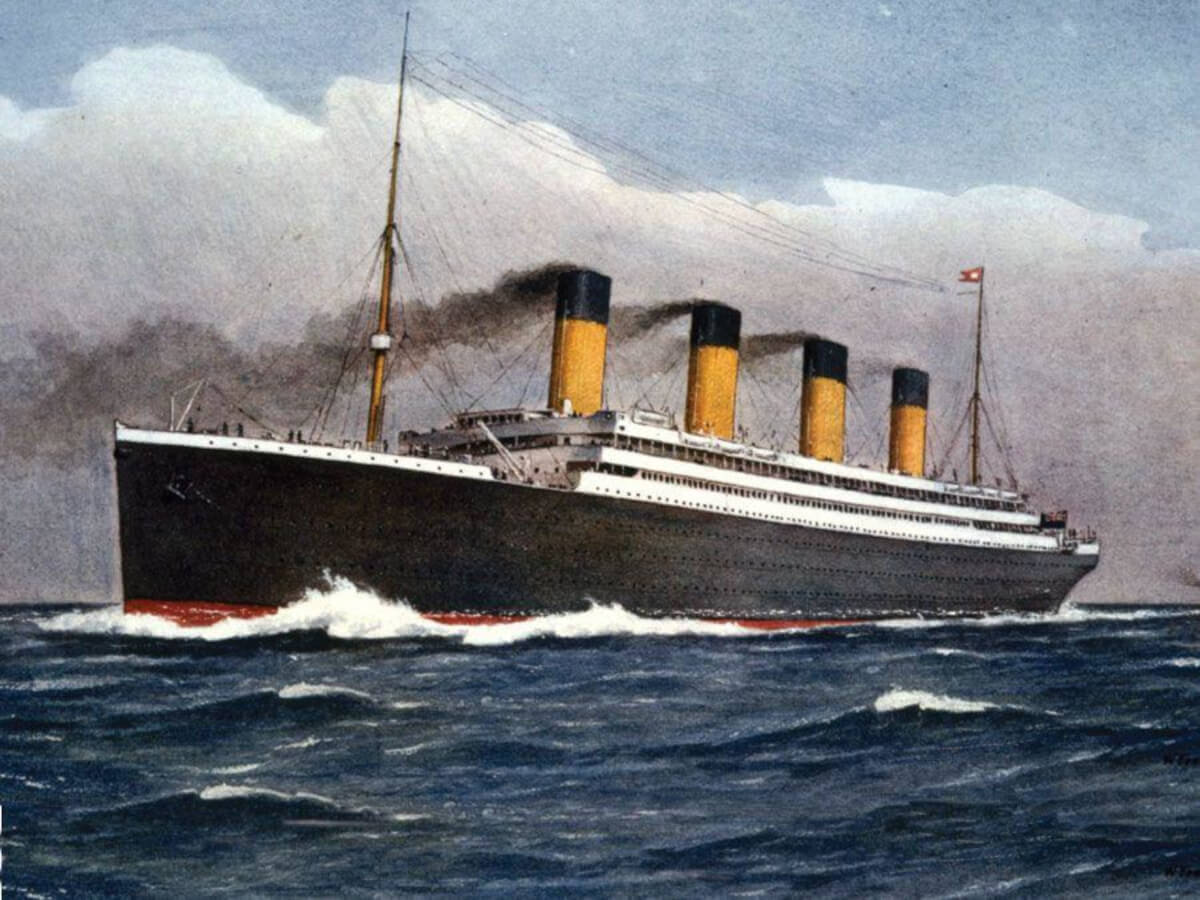
There is a story about an English luxury ocean liner that was deemed unsinkable. On its maiden voyage, it struck an iceberg in the North Sea and went down about 400 miles from Newfoundland, Canada. The ship carried lifeboats for only a small percentage of their passengers, most of which drown at sea.
You think you know this story but in fact this is the plot line to a novella, written in 1898 by Morgan Robertson. This was fourteen years before the sinking of the Titanic. The similarities are spine-chilling but true. The parallels in the stories were so striking that originally titled Futility, the novella was reissued under the title, The Wreck of the Titan.
THE MAIDEN VOYAGE OF THE TITANIC
The British ocean liner, the Titanic left Southampton, England on its maiden voyage on April 10,1912, on its journey to New York City. It struck an iceberg on April 15, 1912, and sunk into the North Atlantic. It had been scheduled to dock in New York City on April 17th. Fifteen hundred passengers and crew members of the 2,208 aboard perished.
The Titanic was the largest ship in operation at the time. It was designed with hundreds of palatial first-class cabins and included gourmet restaurants, charming cafes, a Turkish bath, a saltwater swimming pool, steam room, smoking rooms and was filled with every amenity available in its day. The ship was owned by White Star Line.
THE PASSENGERS INCLUDED THE WEALTHIEST PEOPLE OF THE DAY
The Titanic’s captain went down with the ship but somehow the White Star chairman managed to get onto one of the lifeboats reserved for women and children. It was the deadliest peacetime sinking of a ship in history. On board were the richest people of the day including John Jacob Astor IV (American businessman), Isidor Straus (owner of Macy’s), Benjamin Guggenheim (American mining magnate), Sir Cosmo Duff-Gordon (Scottish baronet), Archibald Gracie IV (American historian) and William Thomas Stead (prominent journalist).
THE SHIP WAS WARNED OF DRIFTING ICE
Several warnings were received from other ships about drifting ice, but the captain disregarded them. He believed the ship was unsinkable. On April 14 at 11:40 pm a ship’s lookout spotted the iceberg. The ship was ordered to steer around it but was too late. The impact created a series of holes below the waterline. The steel plates on the hull buckled and separated, forcing water to rush in. It became certain the ship would sink. Most of the crew were newly hired and not trained in evacuation procedures. The officers had no idea how many people the lifeboats could hold. This led to many lifeboats being launched half full. Third class passengers were given no opportunity to evacuate with most being trapped below deck.
IT WENT DOWN WITH HUNDREDS OF PEOPLE CLINGING TO THE SHIP
At about 2:20 am, the ship went down with hundreds of people still clinging to the ship. Although the lifeboats could have held 500 more people, only five of the hundreds thrashing around in the water were pulled to safety into the lifeboats.
The ship had the capacity to carry 48 lifeboats but only 20 were aboard. Of these only 14 were regular lifeboats with the rest being either cutter lifeboats or collapsible ones which proved to be impossible to launch while the ship was sinking.
Distress signals were sent but none of the ships that responded were close enough to provide assistance before the ship sank. It was the second ship White Star Line had lost on a maiden voyage. The first was the RMS Tayleur in 1854. This sinking highlighted a need for major changes in maritime safety regulations, but none were implemented until after the Titanic disaster.
WILLIAM THOMAS STEAD
In an interesting side note, one of the Titanic passengers who died was William Thomas Stead. He was an English investigative reporter. For years, he claimed that he would die by drowning. In 1886, he published an article, “How the Mail Steamer Went Down in Mid Atlantic by a Survivor”. It recounted the story of two ships colliding, resulting in many dying because there were not enough lifeboats. In 1892, he wrote, “From the Old World to the New”, in which a ship collides with an iceberg.
WERE THE TITANIC AND THE TITAN REALLY SO SIMILAR?
Both ships were ultra luxury British ships and believed to be unsinkable by their builders. Both struck an iceberg on their starboard side in the North Atlantic Ocean around midnight in April, about 400 miles from Newfoundland, Canada. Neither ship carried lifeboats for all their passengers and crew.
The Titanic only had 20 lifeboats which could hold 1,176 people, with the Titan having 24 lifeboats which could only hold 500 people. Robertson made his lifeboats extremely small to emphasize the dangers of having an insufficient amount of space available in the event of a disaster.
The Titanic was 882 feet long while the Titan was 800 long. The Titanic was traveling at a speed of 23 knots with 16 watertight compartments while the Titan was moving at 25 knots with 19 watertight compartments. They had similar capacity, with the Titanic having room for 3,360 people with the Titan having room for 3,000. Robertson described his imaginary ship as having three propellers, while the Titanic was the first liner to ever have this innovation.
WAS ROBERTSON CLAIRVOYANT?
Many people believed due to the uncanny similarities between the fictional Titan and the Titanic that Robertson, an American author had precognition and was clairvoyant. He always denied it and claimed he wrote the book based upon his widespread acquaintance with the maritime industry.
Robertson was a former sailor and a prolific author. His story of the Futility was inspired by his desire he claimed to warn people about shipping companies prioritizing profits over the safety of their passengers.
Robertson’s ability to predict the sinking of the Titanic has been written off in history as being based on his maritime expertise. This coupled with his awareness that shipbuilders were aggressively competing to design larger, more opulent and faster ships without safety considerations for the highly profitable North Atlantic route. Do you believe that?