
FIDEL CASTRO AND HIS LOVE OF DAIRY
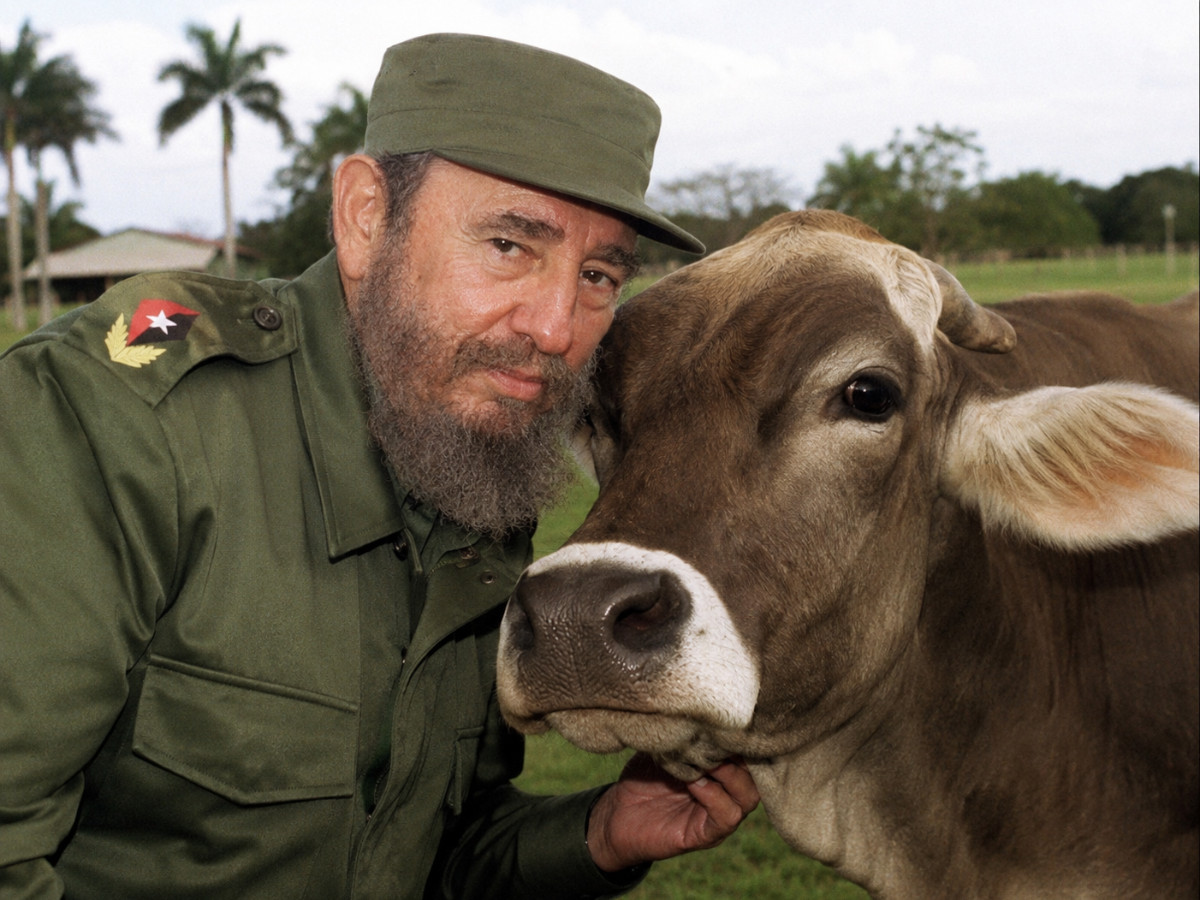
In 1959, Fidel Castro overthrew the American backed dictator of Cuba, Fulgencio Batista and became the Prime Minister of the country. By the following year, he had nationalized all foreign property, without compensation. This included all American owned oil refineries, sugar plantations and banks. At the same time, he entered into trade agreements with the Soviet Union. By the Fall of that year, any remaining foreign businesses and private properties were confiscated.
In retaliation, President Dwight D. Eisenhower initiated an export embargo. It ended all trade with Cuba excluding humanitarian food and medicine. At the time, it was believed that this action would destabilize Castro’s government. In 1962, President John F. Kennedy made the embargo permanent. This had a devastating impact not only on the economy but Cuban society as a whole. The embargo restricted Cuba’s access to essential goods, foreign investments, and international markets.
ESTABLISHING A DAIRY AND CROSSBREEDING PROGRAM
In this environment, Castro established a massive dairy and crossbreeding program with the goal of Cuba attaining food self-sufficiency. It was motivated by a need to prove that the socialist model could grow into an independent agricultural giant.
THE CUBAN SUPER COW
Its objective was to develop high yielding “Super Cows”. He planned to make milk readily available to every child in the country. Politically, this would end the country’s dependence on the United States. It was something he was anxious to prove could be achieved after the United States embargo on imports caused country wide shortages. Yet behind this ambitious program was Castro’s lifelong bizarre obsession with dairy products.
CASTRO AND HIS ADDICTION TO DAIRY
Castro had an intense addiction to dairy. He would finish a meal with 18 to 28 scoops of ice cream and consume multiple milkshakes daily.
Castro loved his ice cream so much he wanted to try the famous American brand, Howard Johnson’s ice cream. In order to circumvent America’s embargo, he ordered his ambassador to Canada to secure all 28 flavors and have it sent Cuba for him to enjoy. He had a square block in Havana turned into a palace of ice cream called Coppelia which continues to operate today. It serves thousands of people daily.
CUBA’S NATIVE CATTLE WERE POOR MILK PRODUCERS
The native cattle in Cuba were the Criollo and the Zebu. These breeds were well adapted to the Cuban climate but were poor milk producers. To address this, Castro personally oversaw the import of over 20,000 Holstein cows from Canada to increase milk supply. Holsteins were excellent milk producers. The Holsteins could not, however, survive the heat; a third of them died almost immediately. After that, Castro had barns air conditioned. To benefit from the Criollo and Zebu’s capability to withstand the heat and the Holstein’s skill at producing milk, Castro embarked on a crossbreeding program. He intended to create heartier, more productive cattle with high output. He christened the hybrids the “Tropical Holsteins”. This brought about a mammoth artificial insemination program.
THE FAILURE OF BREEDING SUPER COWS
The breeding program did produce a few legendary record setting milk cows. The extreme yield, however, did not get passed along to future generations. Their descendants were neither heat resistant nor high milk producers. The resulting generations were sickly animals with diminished milk output.
IT LED TO THE DESTRUCTION OF CUBA’S DAIRY AND BEEF CATTLE INDUSTRY
Castro’s crossbreeding and insemination program destroyed Cuba’s native herds. The native breeds were eradicated as a result of government neglect after they confiscated all the country’s cattle. This caused a substantial drop in the fertility rates of the surviving cows and the collapse of Cuba’s dairy and beef industries.
HOW IT DESTROYED CUBA’S CATTLE INDUSTRY
The government nationalized private cattle herds from all Cuban farmers. This shattered traditional grazing practices and interrupted historical selective breeding mastery. Under government control, native breeds were transformed into significantly less productive cattle.
After the government destroyed the cattle industry, they walked away from the problem. They instead turned their attention to utilizing agricultural land to grow sugar cane to sell to the Soviet Bloc. This further degraded the herds. These government policies created critical long-term declines in dairy and beef production. From 1964 to present day, milk has to be rationed and restricted to small children. Things became so critical that by the 1970s, the Soviets had to provide powdered and canned milk to Cuba. By the 1980s, the Tropical Holstein breed was disappearing due to horrendous living conditions and malnutrition. While the government was ruining the industry, they went to great lengths to depict its success. They even issued postage stamps portraying healthy, thriving cattle.
UBRE BLANCA
Ubre Blanca (White Udder) was the most successful outcome of Castro’s attempt to breed “Super Cows”. Castro continuously touted her as an example of the success of the program. She produced 28.93 gallons of milk in a single day. This was four times a normal cow’s output. She was a crossbreed between Holstein and Zebu. She broke world records and was featured daily in the communist party newspaper.
Castro loved Urbe Blanca and his well-known affection for her bordered on a bizarre obsession. He made sure she lived a lifestyle worthy of his love. Her home was a specialized stable with constant security protection. Soothing music was piped in during her milking sessions. Visiting diplomats and world leaders were given the honor of visiting her.
When she died, she was given a full obituary, eulogy and had a marble statue erected in her honor. Taxidermists stuffed her body placing it in a climate-controlled glass case at the entrance of the National Cattle Health Center. There were many attempts to clone her, but none have been successful to date.
CASTRO PROPOSED BREEDING DOG SIZE COWS
In 1987, Castro conceived the idea of providing families living in cities with fresh milk. He instructed scientists to develop a dog size cow that families could keep in their apartment. The plan never made it past the planning stage because it was fantasy. Reducing the cow to dog size would have taken decades of selective breeding. Decreasing the size would also reduce the animal’s capacity to produce milk. Housing hundreds of thousands of these cows inside urban high-rises would make disposing of their biological waste an overwhelming challenge.
THE CIA PLOT TO KILL CASTRO WITH A MILKSHAKE
The CIA, together with the Mafia in 1963, set out to assassinate Castro, using his love of milkshakes. He would order a chocolate milkshake daily from the Havana Libre Hotel.
A hotel waiter was bribed to mix a lethal dose of botulinum toxin into his milkshake. To keep the toxin active before his arrival, the waiter placed it in a commercial freezer. When he went to recover it, the capsule had frozen solid to the shelf. Attempting to free it, the capsule broke open, spilling the toxin all over the floor.
CUBA’S BREEDING PROGRAM LEGACY
Motivated by his obsession with dairy, the cattle breeding program was an unsuccessful campaign. The country continues to grapple with brutal shortages, rationing and modest milk output today.