
THE TERRIFYING LEGEND OF BANNERMAN ISLAND
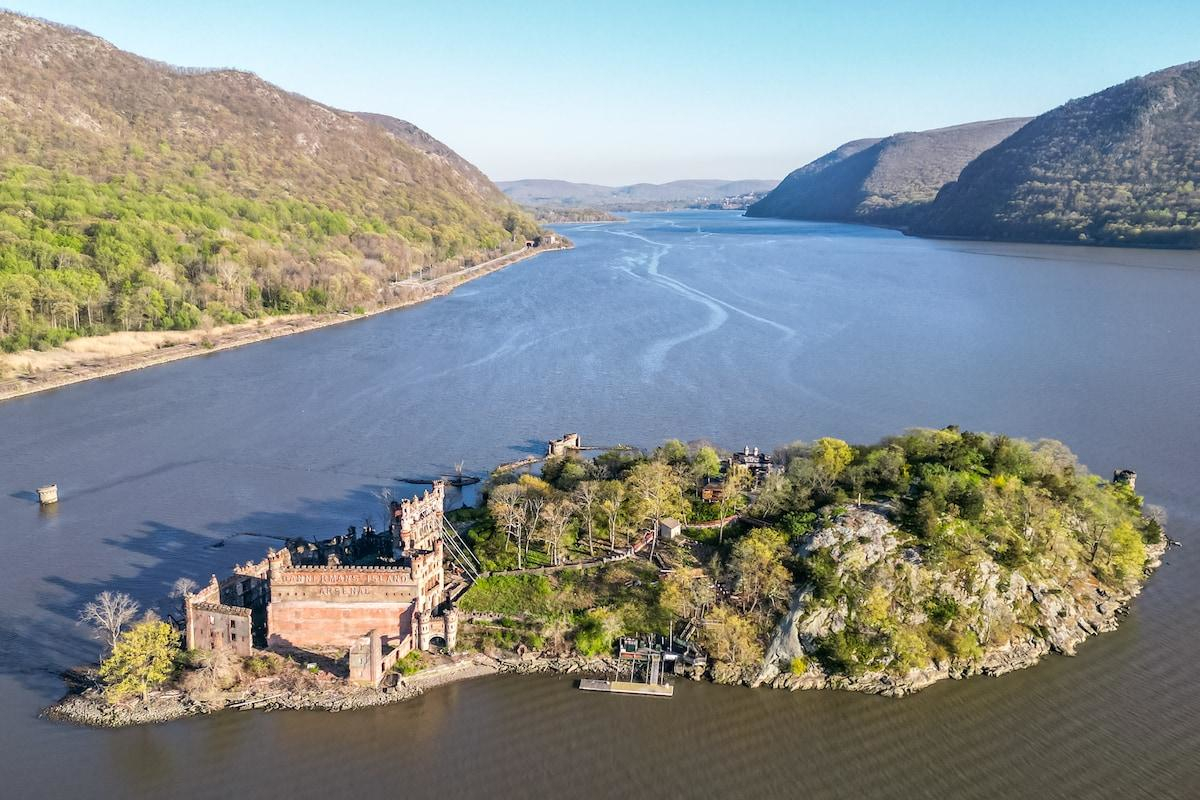
Bannerman Island is located in New York’s Hudson Valley between the towns of Beacon and Cold Springs, in the Hudson Highlands. It is considered a haunted location. It has a long and terrifying history that stretches back for as long as people inhabited the area.
The EARLY HISTORY BANNERMAN ISLAND
Native Americans would not go near the island believing evil dark spirits controlled the land. Dutch sailors trying to escape danger from the indigenous tribes sought refuge there knowing the natives would never come after them. The sailors, however, only did this as a last resort, as they were petrified of setting foot on the island. The Dutch believed a group of goblins controlled the waters around the island triggering violent storms. They told stories of a “Storm King”, a vile spirit who dispatched his “storm ships” brimming with the murderous goblins to kill them. Other stories told of Dutch settlers leaving drunken men on the island as offerings to appease the goblin king. Still others told of men left on the island overnight to test their bravery.
THE PATRIOTS USED THE ISLAND DURING THE AMERICAN REVOLUTION
Although greatly feared by the locals, the patriots used the island during the American Revolution as a strategic lookout point. To defend the Highlands and keep the British from traveling upriver, they used a device known as the “chevaux de frise”. These contraptions were made of wooden cribs that were filled with metal tipped pointed logs that were then lowered into the river. Hidden from view, the hulls of British ship were ripped apart. The English quickly learned to use flat bottom boats to evade the “chevaux de frise”. Washington ordered the island to be turned into a prison but there is no evidence that this was ever done.
THE ISLAND IS ACTUALLY NAMED POLLEPEL ISLAND
The island is officially named Pollepel Island. Legend claims that it was named after a young woman, Polly Pell. After the ice gave way under her, she fell into the water near the island. A man saw her thrashing around in the water and saved her, carrying her onto the island. They fell in love and married.
Another more logical explanation for the name was the Dutch word pollepel which translates into ladle. The drinking culture of the Dutch at this time used a ladle to serve drinks from a large, shared pot. The sailors would sit around the vessel drinking excessively. This tradition has a long history in Holland with the resulting phrase “being drunk with ladles”. Folklore concerning drunken sailors being left on the island as offerings to appease the goblin king supports this interpretation.
BANNERMAN BUILDS AN EMPIRE
At the age of three, Francis Bannerman came to America from Scotland with his family. They settled in Brooklyn, New York with his father selling goods at Navy auctions. While still a teenager, Francis started to collect scrap from around the harbor.
After the Civil War , government military surplus flooded the market. He turned this opportunity into a lucrative business. Bannerman started buying the surplus at auctions. He purchased ammunition and equipment in such great quantities after the Spanish American War, that New York City passed laws forcing him to seek storage outside of the city.
BANNERMAN SEEKS A NEW HOME FOR HIS ARSENAL
In 1900, Bannerman purchased the 6.5-acre island then called Pollopel Island, after his son saw the vacant land while going up the Hudson River on a sailing trip. After buying the island, he started construction of a castle to store his ammunition. His castle was a mix of architecture he had seen in Italy, Scotland and Bavaria. The castle was not built by stonemasons but local workmen and crudely covered with cement. It was never really meant to be a real castle, just look like one. The purpose was always to be used as a storage facility, abet an amazing looking one. He also built a summer home for his family on the island.
Bannerman moved his goods from Brooklyn up the Hudson by barge and train. He painted a massive sign, “Bannerman’s Island Arsenal” across the castle. He became the largest arms dealer in the United States. Bannerman purchased every piece of military ordnance he could get his hands on, as long as he could get it dirt cheap. All his goods were stored in the castle until sold. His customer base was not limited to third world countries and Far East armies but also included original people who wanted guns and local communities for their war monuments. He even sold arms to the United States Navy. He purchased the rifles used in the Battle of Big Horn, some that were still loaded, after the Hunkpapa Lakota leader, Sitting Bull, was forced to give up the tribe’s weapons.
BANNERMAN’S DEATH, THE EXPLOSION AND THE END OF THE BUSINESS
Before the castle was completed, Bannerman died in 1918 from exhaustion caused by overwork. In 1920, a massive explosion rocked the island. The blast was so powerful that towns up and down the river were rocked by the detonation. It knocked down the unfinished towers of his castle. A 25-foot piece of the building landed a thousand feet away on the New York Central Railroad tracks. Every window on the island was blown out. After Bannerman’s widow who was staying at their summer home on the island escaped death during the explosion, the island was left to caretakers to manage the property. Many maintain the spirits of men killed in the explosion still haunt the island.
New government regulations concerning army surplus sales severely restricted the business. The ferry to the island sank in 1950 during a storm, rendering the island impossible to occupy and put an end to the business. Caretakers left the island in 1957. By the end of the 1950s, the arsenal was decommissioned. The castle was left to rot succumbing to fires, storms and looting.
THE ISLAND IS STILL BELIEVED TO BE HAUNTED
Even today, the locals and curiosity seekers claim it is a haunted place. Many claim to be witness to bizarre activities such as ghosts, unexplained lights and strange sounds coming from the island. There are accounts of flickering embers within the ruins and the smell of smoke waffling across the river. Shadowy figures are frequently reported roaming around the island. There are many anecdotes from boaters and kayakers citing paranormal apparitions appearing at the remains of the window frames. These incidents were followed by reports of feeling chilled and being watched. It was a scary place with an unsettling presence. Frequent spiraling fog surrounds the island. No one would dispute that there is a supernatural presence lingering on this site.
THE ISLAND IS PURCHASED BY NEW YORK STATE
New York State purchased the island in 1967 and turned it into a tourist attraction. In 1969, a three-day fire completely destroyed what remained of the castle, leaving a gutted shell. One can see the ruins of the castle while driving along Route 9D, which runs along the Hudson River. The island was then officially closed.
THE ISLAND IS REOPENED TO THE PUBLIC
In 2004 the Bannerman Castle Trust reopened the site. Today, it is a popular tourist destination. From May to October, there are a variety of tours to get to the island. A riverboat ride from Beacon or Newburgh takes you on a guided walking tour. There are kayaking trips from Cornwall. An annual concert and performance series, as well as movie nights, a butterfly watching tour and farm-to-table dinners which continue to attract people to the island.