
WAS SANTA CLAUS INSPIRED BY A HALLUCINOGENIC MUSHROOM?
On Christmas Eve, Santa Claus leaves his home at the North Pole and flies across the night sky on his sleigh. He is pulled by eight reindeer led by a ninth reindeer with a shiny red nose lighting up with winter sky, delivering toys and goodies to children. As his loyal reindeer land on each rooftop, he enters the homes of good girls and boys by descending through the chimney where milk and cookies await him. A wonderful story but as children come of age they learn there is no Santa Claus. So, where did the story of St. Nicholas originate from?
HISTORY OF SANTA CLAUS
The story of Santa Claus can be traced back to a 4th century Greek Bishop from what is now Turkey. Saint Nicholas became famous for his generosity. He was known to give secret gifts to the poor. A legend surrounding his kindness recounts the story of three sisters. They were so poor, the family could not afford dowries for their daughters. Unable to marry them off, the father was going to be forced to sell them into prostitution or slavery. In the dark of night, St. Nicholas secretly threw bags of gold through a window into their house, saving them. Very little is known about his life and historians question if the little that is known is even true. His esteemed reputation, however, for holiness and miracles made him quickly recognized as a saint. Legends about him grew and he became so revered that by the Renaissance; he became the most popular saint in Europe. He wore traditional Byzantine clerical vestments not a red suit trimmed in white fur, and he certainly was not jolly. Yet it is said that his charity inspired today’s version of Santa Claus.
THE DUTCH CREATE SINTERKLAAS
Sinterklaas is a character created in Holland, it merged Saint Nicholas with pre-Christian Germanic folklore during the Middle Ages. The Nordic god Odin with his long beard, was associated with the winter solstice festival of Yule. Olin on his eight-legged horse, Sleipnir would ride through the winter sky. Children would leave straw or carrots in their shoes by the chimney for the horse and Odin would replace them with toys and candy.
Sinterklaas would arrive in the Netherlands by steamboat from Spain each November with his horse, helpers and a boat full of oranges, a prized treat. Trade routes had historically brought oranges from Spain. Sinterklaas carried a big red book indicating which children were good or bad that year. He rode his white horse over rooftops descending through chimneys to bring gifts to good boys and girls. The children, like in the tale of Odin, left a shoe next to the fireplace with a carrot and a bowl of water for the horse.
The character of Sinterklaas was only known in Scandinavia until a group of Dutch families in New York got together in 1773 to honor St. Nicholas on the anniversary of his death, December 6th, which is Sinterklaas Feast Day. This event was reported in newspapers introducing Sinterklaas to America.
WASHINGTON IRVING
Washington Irving could find no success as a writer. In 1809, out of frustration, he perpetrated a hoax by taking out missing person ads in local newspapers trying to find Deidrich Knickerbocker. He claimed that Knickerbocker went missing after staying in a hotel without paying his bill. The hotel owner warned that he would release the manuscript Knickerbocker had left behind if he was not paid. Such a frenzy was whipped up by these ads that New York officials wanted to offer a reward to find Knickerbocker. Irving then released the book “A History of New York from the Beginning of the World to the End of the Dutch Dynasty”, by Diedrich Knickerbocker. The book found tremendous success, portraying St Nicholas for the first time in writing, riding in a wagon over treetops bringing presents to children. This hoax brought Irving the beginning of his great fame as a writer.
NICHOLAS’ TRANSFORMATION
In 1823, the poem,” A Visit from St. Nicholas” better known as “the Night Before Christmas”, attributed to Clement Clark Moore cemented St Nicholas’ transformation from saint to the Santa Claus.
COCA-COLA DEFINES THE IMAGE OF SANTA CLAUS
Coca-Cola had a problem. It was seen as a cool refreshing summer drink. During the winter months their sales plummeted. In 1931, the D’Arcy Advertising Agency was hired to create a campaign that would associate Coca-Cola with Christmas. Up until this time, there was no standard look for Santa Claus. Sometimes he was seen as skinny, other times fat. Sometimes he was even depicted as an elf. The artist, Haddon Sundblom created the jolly, plump, white bearded Santa in a red suit, that we know and love today. It was no coincidence that Santa’s suit matched the red and white colors of the Coke can. The campaign’s success came to define the modern image of Santa Claus.
RUDOLPH THE RED NOSED REINDEER
In 1934, Robert L. May, a Montgomery Ward department store employee, created the story of Rudolph the Red Nosed Reindeer. Published as a promotional giveaway booklet, over 2.4 million copies went into circulation in the first year. Rudolph’s poignant story of a shy young, self-conscious fawn whose nose was so bright, all the other reindeer made fun of him resonated with children everywhere. When the ostracized reindeer went on to become a crucial member of the sleigh team by lighting up the night sky, it delighted and inspired. The booklet was reissued in 1946, selling 3.5 million copies. By1949, the famous cowboy singer, Gene Autry recorded a song based on the Rudolph story. It sold over two million copies. In 1964, the story was made into an animated movie that has since been translated into 25 languages, making Rudolph as famous as Santa Claus.
CHRISTMAS – THE MOST BELOVED HOLIDAY ON EARTH
Today, all over the world St. Nicholas brings toys to children on Christmas making it the most beloved holiday on earth. He is known by many names around the world. He is Pere Noel in France. In Italy, La Befana, Kris Kringle in Switzerland and Germany, Father Christmas in England, in Bosnia, Herzegovina, they call him Sveta Nikola in Croatia and Serbia, and in Greece, Agios Nikolaos.
DOES SANTA CLAUS REALLY HAVE A MUCH OLDER ORIGIN
Did a pious 4th century bishop who dressed in traditional religious garb really inspire stories of a figure in red and white clothing, riding on a sled pulled by reindeer and descending from rooftops down chimneys? Are there much older roots hiding in the Santa Claus story?
THE AMANITA MUSCARIA MUSHROOM
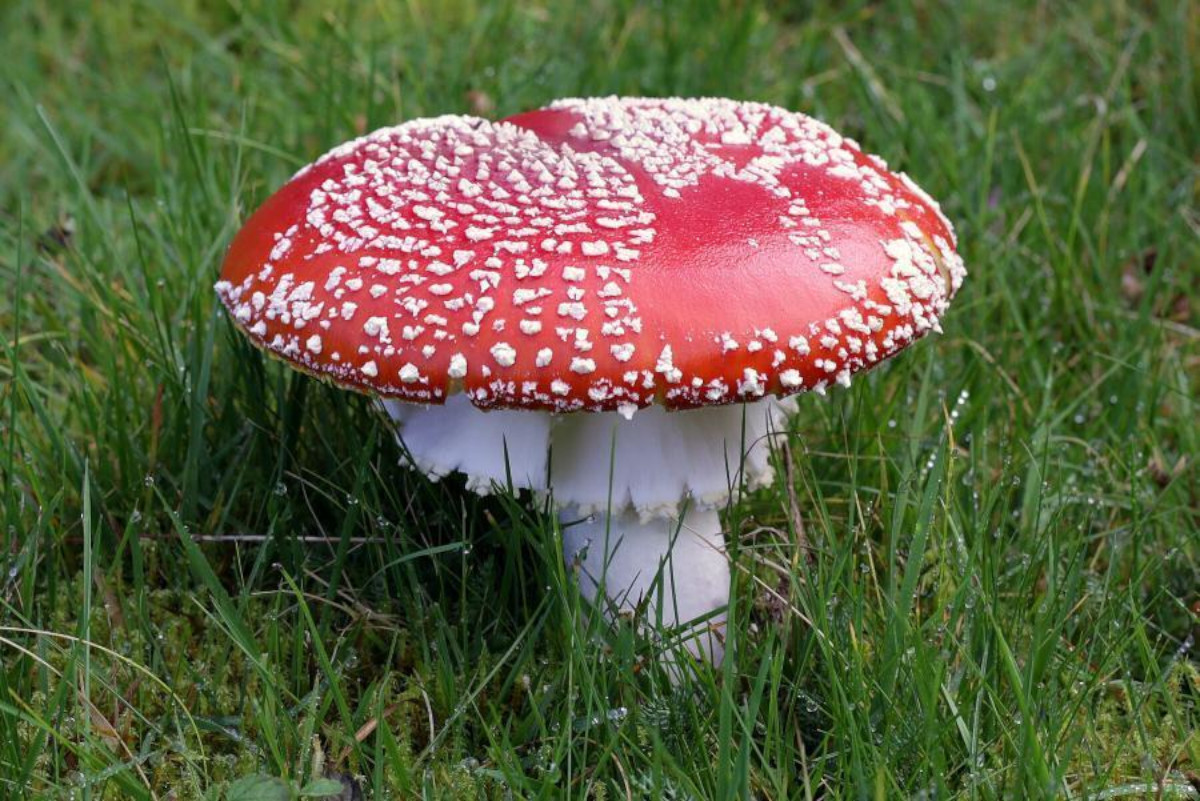
For over 10,000 years shamans have gone into a hallucinogenic state to perform sacred rituals. These ceremonies were created to transport the shaman into the otherworldly realm to communicate with spirits. Through this connection, the shaman attained insights allowing him to restore balance to the community. It allowed him to predict the future, heal individuals and communicate with dead relatives. The hallucinogenic state was achieved by using the Amanita muscaria (fly agaric), a red and white spotted mushroom.
THE SAMI PEOPLE
There is an indigenous tribe in Sapmi in North Scandivinavia (Lapland) known as the Sami people. The Sami shaman, often wearing a red and white robe, went out on sleds drawn by reindeer into the forest, collecting fly agaric mushrooms from under trees during the winter solstice. He would then return to his circular covered tent, insulated with felt or skins called yurts. Tradition yurts have holes cut around the apex of the tent to create a smoke hole in the roof. The shaman would enter his yurt through the opening in the roof, since the door was usually blocked by snow. He then descended through the smoke hole down a pole with his sack of fly agaric. He would present them to the villagers through the openings in the roof of their yurts. After receiving the mushrooms, the villagers would hang them by the fire to dry.
The Sami are reindeer herders. They were used to drive the sleds. The reindeer also enjoyed ingesting the fly agaric mushroom, turning their noses red and acting in an excited state, jumping up and leaping around the forest. Consuming the toxic mushroom without proper precautions can cause sickness or death to humans. Reindeer, however, do not suffer from negative side effects after ingesting the mushroom. There were two favored ways for the shaman to consume the mushroom without adverse effects: One was to dry the mushrooms out. The other was to drink reindeer urine. After digesting the mushroom, the reindeer would metabolize its toxins and excrete the urine still loaded with psychoactive chemicals but without the toxins. This allowed the shaman to experience the hallucinogenic effects without getting sick and enter an altered state without experiencing side effects.
SEEING THE CONNECTION
Carl Ruck, a professor of classics at Boston University, made the connection between magical flights the shaman took while hallucinating and Santa Claus’ flight on Christmas Eve. While writer and mycologist Lawrence Millman tells of the belief among the Sami that shamans grew to resemble the red and white mushroom. He further found that shamans were often given food after gifting mushrooms to villagers, making the comparison to Santa being rewarded with milk and cookies.
The sky agaric mushroom was usually found under pine, birch, spruce, or fir trees, the same type of trees decorating living rooms at Christmas. The shaman frequently placed the mushrooms they picked on the branches of a tree to dry. Is this where the tradition of decorating a Christmas tree with ornaments comes from?
One of the known side effects of consuming the fly agaric mushroom is the sensation of flying. Can the origin of Santa actually be based on a shaman dressed in red and white, flying through the night winter sky on a sled being driven by reindeer with a sack full of presents being delivered from the roof down the chimney? It is possible the shaman observed his reindeer flying through the air while he was in a hallucinogenic state.
Santa Claus was not a magic mushroom, but one can make the case that the Sami shaman might just possibly have been the original Santa Claus.