

THE CHINESE BROTHER OF JESUS
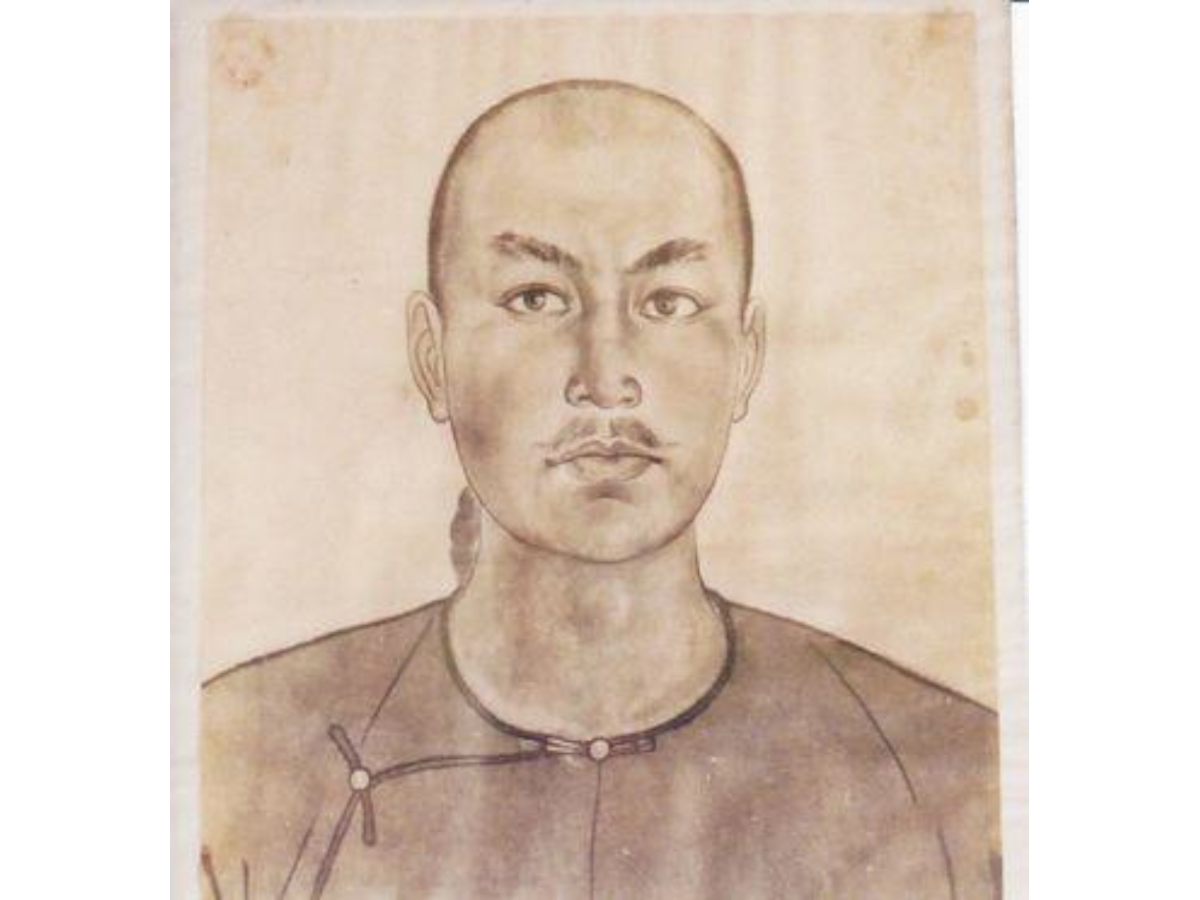
Have you ever known someone so absolutely sure they would succeed that they never considered any alternative? Yet no matter how hard they tried they failed miserably? This was how life for Hong Xiuquan was turning out.
Hong Xiuquan was known as the Chinese brother of Jesus. After having a complete mental fracture, he came to believe he had both a celestial family and an earthly family. His subsequent actions and beliefs led to the deadliest civil war in history.
HONG XIUQUAN WAS UNABLE TO PASS THE IMPERIAL CIVIL SERVANT EXAM
Hong Xiuquan (1814-1864) was born in the province of Guangdong, in the village of Fuyuan Springs. As a small child he had an intense interest in learning. Observing this, his parents had aspirations for him becoming an imperial civil servant. They sacrificed everything to get him an education, knowing the position would bring prosperity and honor to the family. He was a dedicated student determined to pass the Confucian exams. He obtained the highest score in local entry level exams and was encouraged to believe he would achieve greatness. He subsequently took the provincial level exams at Guangzhou (Canton), the provincial capital. This was a center of western trade and ideas. After failing, his parents were unable to continue supporting his studies. He was forced to become a farmer. Hong was determined to find a way to carry on his education. He found a wealthy student who agreed to support him as they continued their studies together. Twelve months later, he returned to his village as a schoolteacher.
INTRODUCTION TO CHRISTIANITY
He returned to Guangzhou in 1836 to retake the exams. A foreign missionary, Reverend I.J. Roberts, was giving sermons proselytizing Christianity. Hong was provided with a set of his pamphlets, “Good Words for Exhorting the Age”. He had little interest at the time and did not read them. He did, however, keep them. Hong then failed the exams for the second time.
THE MENTAL BREAKDOWN
In 1837, he took the exams for the third time. After failing again, he snapped and had a complete mental breakdown. Hallucinating, he had visions of encountering an old man with a golden beard who gave him a sword and seal to rid the world of demons. He then imagined a middle-aged man who taught him how to go about doing this. When he had sufficiently recovered, he returned to his job as a schoolteacher. Five years later, he retook the exam for a fourth time in 1843 and once again failed.
REINTRODUCTION TO CHRISTIANITY
When a cousin of Hong’s visited him, he looked though Hong’s bookshelf and discovered the works by the Christian missionary, Hong had saved. After reading the pamphlets and expressing interest, he encouraged Hong to read them. In exploring the concepts of Christianity, he believed he found enlightenment. He was convinced that they gave him the knowledge to interpret the visions that had overtaken him during his breakdown. He concluded that during this time, in an act of divine intervention, he had been brought to heaven. There he came upon an old man and realized it was his heavenly father, God. The middle-aged man he had met was the son of God, Jesus Christ. The old man explained that Hong was the second son of God, the brother of Jesus Christ. They had sent him to earth to save the Chinese people. He believed the sections of the bible included in the pamphlets were written specifically about him. He and his cousin baptized each other and became Christians
HONG STARTS HIS OWN MINISTRY
He started to spread his new beliefs among his family and friends. He took to destroying Confucian and Buddhist shrines, for he came to believe they represented demons. When he ruined the Confucian tablets in his village school he was fired. He decided to become an evangelist. Traveling to the nearby province of Guangxi, he took with him his most devoted follower, Feng Yunshan, a former classmate. When Hong returned to his village months later, he left Feng to continue delivering sermons.
HONG RETURNS TO GUANGZHOU TO STUDY CHRISTIANITY
In 1847, the Reverand I.J. Roberts, the Christian American missionary who had first given the pamphlets to Hong, invited him to visit Guangzhou to study Christianity. He offered to provide Hong with translated copies of the New Testament and to baptize him. After two months of study, Hong abruptly left. The reason is not clear, but his understanding of a Christian God differed greatly from Roberts. Hong’s God was a vengeful lord requiring strict obedience and worship. He dismissed New Testament concepts like the original sin and redemption. The notion of benevolence, tolerance and charity were ideas that were foreign to him. He did not understand beliefs that did not preexist in the Chinese culture. Roberts was becoming increasingly concerned that Hong appeared to want to use Christianity as a tool to move a political agenda forward. This most likely caused issues between the two men. It is known that Roberts refused to baptize Hong.
SEARCHING FOR FENG YUNSHAN
After Hong left Robert’s house, he went to find Feng in Guangxi. He had left him there to continue preaching and seeking converts. He found him in the Thistle Mountains. In Hong’s absence Feng established the sect, “The God Worshipping Society”, (Baishangdi Hui) dedicated to Hong’s ideology. When Hong returned, he was immediately acknowledged as the community’s leader. Aside from Feng, two others rose to religious leadership roles in the new society: Xiao Chagui who believed Jesus spoke through him and Yang Xiuqing who believed God spoke through him.
The followers came from many levels of Chinese society. As the community expanded, the Qing dynasty decided to take action to eliminate them, sensing a challenge to the establishment. Sending an army into the Thistle mountains, they threatened to kill all Hong’s followers. Only a minor clash followed. It was, however, the start of what would become a civil war.
THE TAIPING REBELLION
The actions of the Qing altered Hong’s preaching to include strong anti-government views meshed with religious fervor. By 1850, the movement had amassed a following of more than 10,000 devotees. They were required to obey strict practices to eliminate all evil such as gambling, smoking opium and prostitution. Peasants gladly supported Hong in massive numbers. They were destitute, suffering under extreme poverty and ethnic discrimination. To show their opposition to the Qing dynasty, the followers of Hong cut off their queues, the long braids traditionally wore by Chinese men.
By 1851, Hong declared himself “Heavenly King of the Heavenly Kingdom of Peace”. Hong devotees together with Feng’s organizational skills facilitated turning the community into a rebel army. They then initiated an uprising in Guangxi.
He promised his followers that they would overthrow the Qing dynasty and establish an egalitarian society. One that guaranteed equal rights and opportunities for everyone, with property and wealth shared equally. It gave desperate people hope.
THE QING DYNASTY (MANCHU DYNASTY)
China was ruled by the Imperial Qing Dynasty (1644-1912). The dynasty amassed the land through warfare that is the basis for modern China today. The country was ruled by ethnic Manchus who established strict social orders, discriminating against other ethnic groups. Hong belonged to the Hakka ethic group. Historically, they had been treated unjustly and ostracized by the primarily Han population. The Qing dynasty was seen as corrupt and incapable. The Opium Wars caused economic destabilization at a time of population explosion. Adding to this were natural disasters that caused people to fight just to stay alive, inciting bitter indignation among the population.
HONG REMAKES NANJING INTO THE HEAVENLY KINGDOM OF PEACE
In 1851, the Taiping rebels marched into the city of Jintian, where Qing troops were headquartered. They succeeded in taking control of the city. After this success, they traveled to Nanjing along the Xiang River, confiscating boats and increasing their ranks by recruiting converts along the way. In 1860, after several unsuccessful battles, they seized Nanjing. Hong inaugurated the city as the capital of his Taiping Heavenly Kingdom.
Hong’s first order of business was to appropriate and significantly expand the current Qing government headquarters in Nanjing. It became an impregnable, heavily armed, opulent royal complex to serve as his Palace of the Heavenly King.
THEY STARVED THE LOCAL POPULATIONS
The all-out war between the Qing and the Taiping devastated the local populations. The armies were fed by plundering the countryside and appropriating the harvest. The villagers were left to starve to death. As the armies conquered and then reconquered towns, they slaughtered the inhabitants assuming they were in league with the opposing army. It turned into a bloodbath. If the population didn’t starve to death, they were executed.
BATTLE FOR CHANGSHA
At Changsha the rebels faced strong opposition. After losing large numbers of rebels, morale plummeted. To rally the troops, Xiao dressed in colorful royal robes to attract attention and walked into the center of the field. He was immediately shot dead by Qing snipers. With this, Hong lost one of his most important leaders, the man who spoke for Jesus.
HONG RETREATS TO HIS PALACE
Hong reacted by withdrawing from his leadership role and fleeing to his palace in Nanjing. Once ensconced there, Hong spent his days with his concubines catering to his every need, far removed from the war. This led to infighting among his generals. The power struggle further degraded the kingdom.
In 1860 Reverand Roberts arrived in Nanjing. He was in disbelief to learn how the Taiping version of Christianity had developed into nothing that resembled Christianity. It did not stop him, however, from taking a position as advisor to the foreign minister at the Taiping court. After a dispute with Hong in 1862, Roberts left Nanjing claiming Hong had his servant murdered. This event caused him to savagely condemn the Taiping Rebellion.
HONG: THE CRUEL DICTATOR
The Qing dynasty were ethnically Manchu. Because of this, Hong had the entire Manchu population of Nanjing murdered. He then had the most important architecture in the city razed. Anything that represented Qing culture, Hong set about to destroy. Everyone in the city was forced to live communally after he confiscated all the property in Nanjing. It became mandatory for men and women to live separately, even if they were husband and wife. It became illegal to possess alcohol or opium, to bind feet or wear a queue hairstyle.
YANG ATTEMPTS TO OVERTHROW HONG
With Hong entrenched in his palace, Yang conspired to seize the throne. Hong learned of his plan and had Yang’s palace captured. Yang, his family and followers were massacred within the palace. Over six thousand followers of Yang’s still remained in the city. They were all hunted down and slaughtered.
TAIPING REBELS REACH THE PINNACLE OF THEIR POWER
The now massive Taiping rebel army reached the pinnacle of their dominance in 1860. They claimed the area surrounding Nanjing, Hangzhou and Suzhou. Empowered by their success, the following year they attempted to take control of Shanghai.
THE OPIUM WARS
Shanghai was China’s major port. In 1729, the Qing banned opium trade but were unable to enforce the edict. It was not until 1839 that they took measures to halt trade. Over 1,400 tons of opium owned by British merchants were destroyed. China decreed that merchants would be subject to death if they continue to trade in opium.
This set off the first Opium War, with England going to battle over the issue. The lucrative opium trade was an important part of England’s economy at this time. Fighting continued until 1842.The British Navy, with more advanced technology, overwhelmed the Chinese. The Chinese were forced to sign the humiliating “Treaty of Nanking”, making them reimburse England for their losses, increase trade and give up Hong Kong. This forced Shanghai to become an international commercial city.
When the treaty did not result in all the benefits England desired, the second Opium War broke out in 1856 lasting until 1860. This situation added to social unrest in China. By 1861, a British Officer took over control of the port resulting in a substantial increase in international trade.
It was not until the early 20th century that China was able to gain some control of their port. In 1952, the Chinese Communist Party completely shut down trade.
THE BATTLE OF SHANGHAI
Li Xiucheng, the commander of the Taiping army, marched to Shanghai with 600,000 soldiers. Both the British and the French committed to defending the port city to protect their financial interests. The Taiping army had never encountered a modern army before. The immense scope of their weaponry was mindboggling to the Taiping rebels. Cannon fire resulted in massive deaths to Hong’s soldiers. For two years, battles raged for control of Shanghai. The Taiping rebels while committed fighters were no match for the joint armies of the Qing, British and French. Hong ordered his troops to withdraw, ending his hopes of capturing Shanghai.
THE BEGINNING OF THE END
This was the beginning of the end for the Taiping rebel forces. Over the next two years, the Qing army captured every territory the Taiping held until they encircled Nanjing in 1864.
LET THEM EAT MANNA
With the Qing at the gates of Nanjing by 1864, they blocked food supplies from getting into the city. The people started to starve. Hong decreed that the population of Nanjing would survive on Manna, which he understood to mean weeds. To prove to them this would be fine, he pulled weeds from the ground and ate them. As fate would have it, he ate poisonous weeds and died. His young son became the new Heavenly King but was incapable of ruling. He escaped out of the city but was captured and killed. A short time later, the Qing broke down the city gates. The Qing cremated Hong’s body and shot the ashes out of a canon to deny him a resting place. A bloodbath followed and so ended the Heavenly Kingdom of Peace.
LEGACY
It was the most horrific civil war in history. The Taiping Rebellion lasted fourteen years and it is believed that between 20-30 million people perished as a result. It failed but the concept of establishing an egalitarian society would later inspire none other than Mao Zedong.